6 Ways Better Packaging Improves Order Fulfillment Operations
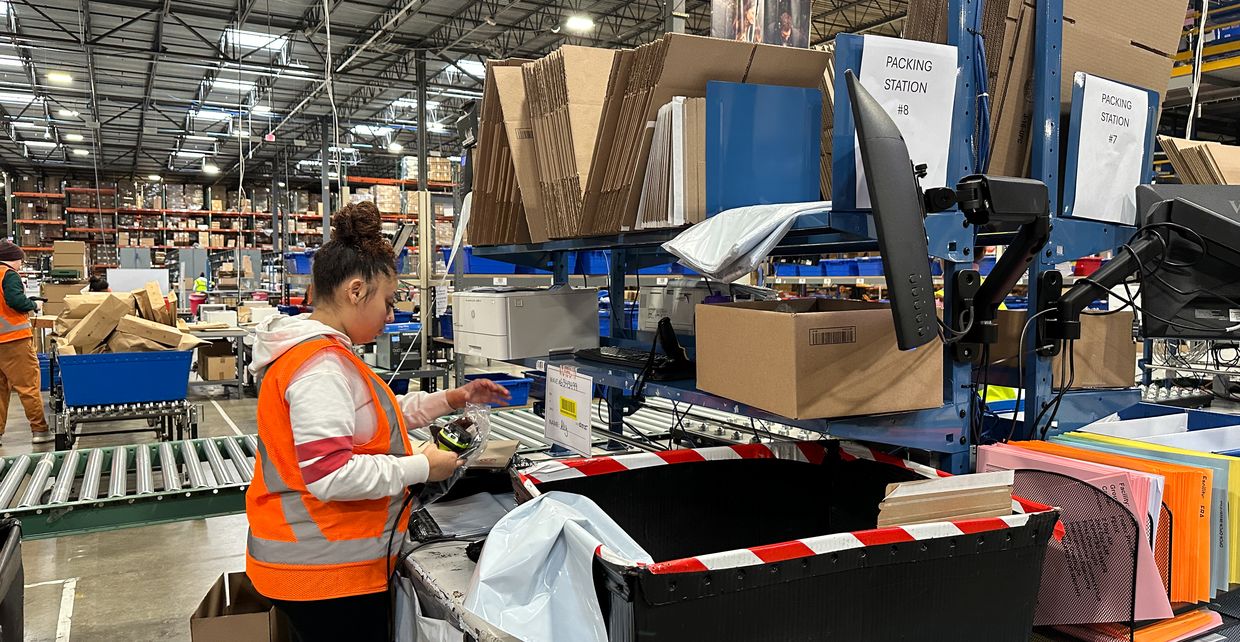
Packaging decisions touch every part of your fulfillment operation. From costs to throughput, damage rates to sustainability, and the experience your customers have when an order arrives. Yet for many operations, packing is still one of the most undermanaged steps in the process.
The global market for paper packaging materials is predicted to reach $420.6 billion by 2030 which is enough proof that enterprises should take their packaging and supply chain sustainability more seriously.
Here are six areas where better packaging practices produce significant operational improvement.
1. Right-Sized Packaging Reduces Shipping Costs
Carriers don't just charge by weight. Dimensional weight pricing means the size of your shipping box determines the rate. A box with two inches of “air space” on every side can cost you more to ship than a tighter pack, even if the product weighs the same. This adds up fast across high-volume operations.
The fix starts with analyzing your box and mailer suite. Reviewing your packaging portfolio and how well your current box sizes match your actual order mix is often one of the fastest ways to find cost savings without changing carriers or renegotiating contracts. The result isn't just a lower cost per package. It's a more predictable freight spend that you can actually plan around.
2. Efficient Packing Reduces Damage and Returns
A box that's too large lets product shift in transit. A box that's too small creates pressure on seams or the product itself. Either way, your customer gets a damaged order and you absorb the cost of a return, the labor to process the return and repack a replacement, and the brand hit that comes with a poor unboxing experience.
Cartonization, is the process of how a box is selected and packed for a particular order. When your packing logic selects the optimal box for each order based on item dimensions and your carrier rate structure, you stop paying to ship air and reduce product damage in the process. Operations that implement modern cartonization consistently see less waste, less damage, and fewer returns. Not to mention the cost savings on materials, transportation or reverse logistics processes.
3. Smarter Packing Reduces Labor Cost and Improves Throughput
Manual box selection slows packers down. When someone at a packing station has to size an order, choose a box, and add protective void fill, you're adding time and variability to every single shipment. During peak season(s), that variability compounds into throughput constraints.
When cartonization logic handles box selection automatically, integrated directly into your Warehouse Management System (WMS) or Order Management System (OMS), packers get a clear instruction and move on. No guessing, no rework, no intervention. The packing station becomes faster, more consistent, and less dependent on experienced staff making the right call under pressure. Operations looking to speed up the packing process even further, are implementing on-demand packaging machines, such as Packsize, to automate right-sized boxes upstream of the packout station.
For operations running higher daily volumes, the labor savings alone can justify the investment of a Packing Control System, built with cartonization at its core. For 3PLs managing multiple clients at the same fulfillment center, it's what makes consistent performance scalable.
4. Packaging Efficiency Supports Sustainability Goals
Packaging waste is increasingly visible to customers, to regulators, and to the retail partners brands sell through. Regulations in the EU, such as the Packaging and Packaging Waste Regulation (PPWR), and across a growing number of U.S. states, are tightening expectations around packaging waste, recyclability, and excess material use. Brands and retailers are facing those requirements directly, and their logistics partners are being pulled along.
The most direct path to reducing packaging waste is right-sizing. When boxes match orders, operations use less corrugated, less void fill, and less material per shipment — and that reduction scales with volume. It's also one of the few sustainability levers that simultaneously reduces cost, making it easier to prioritize internally.
For fulfillment operations working toward ESG targets or responding to retailer sustainability requirements, smarter packing is one of the most direct levers available.
5. Standardized Packing Reduces Chargebacks and Compliance Failures
Shipping into retail channels or onto major marketplaces means working within specific packaging requirements such as pack quantities, box dimensions, label placement, and prep requirements. Those requirements exist for the retailer's operational reasons, and failing to meet them consistently triggers chargebacks that erode margin on every non-compliant shipment.
The challenge for most operations is that compliance requirements vary by customer and change over time. Managing them manually through SOPs, training, and spot checks is error-prone at scale. The more reliable approach is building those requirements into the packing process itself, so compliance is enforced at the time of packing rather than audited after the fact.
Some Packing Control Systems include capabilities that make creating, managing, and testing packing rules possible without heavy IT involvement. Compliance requirements and packing SOPs can be configured directly by operations teams and applied automatically at the pack station, giving packers clear instructions and reducing the risk of non-compliant shipments.
6. Retail-Ready Packaging Reduces Handling Across the Supply Chain
For brands shipping into retail channels, packing decisions have consequences beyond the fulfillment center. How a product is packed determines how much labor stands between your shipping dock and the retail shelf.
Retail-ready packaging, sometimes called floor-ready merchandise, means product arrives at the retailer's distribution center already organized, labeled, and configured for immediate putaway or display. No repackaging, no restacking, no unnecessary handling at receiving. For operations shipping the same SKUs through both DTC and retail channels, this creates a real process design question: how do you apply different packing standards to the same product depending on where it's going? The answer usually involves destination-specific packing rules, different box configurations, label formats, and pack quantities applied based on the order type, so both channels get what they need without separate workflows or manual intervention.
Retail compliance isn't a packaging nicety. It's a cost center that the right packing logic can control.
The Common Thread
Better packaging outcomes don't happen by accident. They come from treating packing as a process decision, one worth the same systematic attention as pick accuracy, carrier selection, or inventory positioning. Operations that get this right tend to see the benefits compound: lower shipping costs, reduced damage, and compliance consistency.
The six areas above are a useful starting point for identifying where your operation has the most room to improve. Want to learn more? Let's talk about packing.